


.png)

Alaska lawmakers consider strengthening civics education requirements for high schoolers

Supporters say the current proposal has options for students to meet the requirement, and is essential amid growing public distrust of government
By Corinne Smith
Alaska Beacon
A proposal to create civics education requirements for all Alaska high school students is advancing in the Legislature, amid a deepening decline in public trust in government nationwide.
Senate President Gary Stevens, R-Kodiak, sponsored Senate Bill 23, which would require high school students to take a semester of civics curriculum, pass a civics exam or complete a project-based assessment in order to graduate. The bill is under consideration in House committees after it passed the Senate in March.
Stevens, a longtime legislator and former University of Alaska professor, told House members at a hearing on March 18 the goal is to inspire students to be more engaged with their government and civic affairs.
“What we hope to do is to rekindle the spirit within our education system to help foster citizenship and voting and community engagement, which is really a fundamental purpose, I think, of public education,” Stevens said.
Civics curriculum in SB 23 would include:
the founding history of the United States, including foundational documents and the principles of government of the United States;
federalism, including the role and operations of local, state, and national governments;
the institutions of the United States government, including the responsibilities of the executive, legislative, and judicial branches;
the rights and responsibilities of United States citizenship;
civil liberties and civil rights;
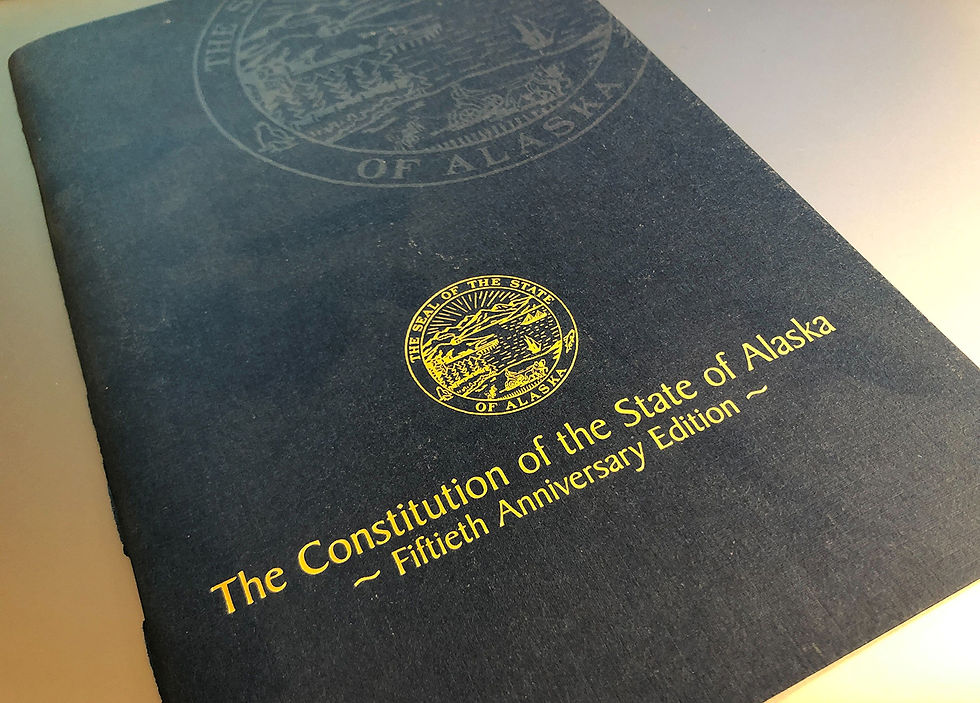
the Constitution of the State of Alaska and the Constitution of the United States;
political parties and interest groups;
campaigns and elections;
the United States Congress;
domestic policy;
foreign policy;
comparative systems of governments used globally and by Alaska Natives;
international relations; and
major issues facing local, state, and the United States governments.
Civics education is the study of how local, state and federal government works in the constitutional democracy of the United States. That includes our government’s laws and history, the rights of citizens and structures of power.
Stevens said in an interview Wednesday that he sees expanding civics education as a way to combat growing distrust or misunderstanding of government.
“Certainly, I think there’s just a lack of understanding. I have talked to a lot of kids who just have no idea that there is a state government and there is a federal government. There’s a difference between the two,” he said, adding that each governments’ roles and responsibilities are important to understand.
Stevens said Alaska’s students should know that, states are responsible for administering public schools and running elections. “I think kids need to know that, and I think they’re interested in it.”
The bill would direct the Alaska State Board of Education to provide open access, no-cost educational resources to districts covering 14 areas of government, politics and public affairs. Those 14 areas include the founding principles of the United States, the Alaska and U.S. Constitutions, federalism, civil liberties and civil rights, political parties, campaigns and elections, comparative systems of government including by Alaska Native tribes, and others.
If enacted, students would have three options to fulfill the graduation requirement: take and pass a semester-long comparative government and civics course, pass a civics exam — with an option e-take the exam if they did not pass — or opt to complete a civics-related project.
In the second term of the Trump administration, public distrust and political polarization has continued to decline in the U.S. A survey completed in September by the Pew Research Center found public trust in government at one of the lowest points since 1958 — just 17% of respondents said they trust the federal government to do what is right. That’s down from 22% in 2024, and reported trust in government has not been higher than 30% since 2007.
Another 2025 survey by the center found that 8 in 10 U.S. adults said that on important issues facing the country, Republican and Democrat voters not only disagree on policy and plans, but also can’t agree on basic facts.
Shawn Healy with iCivics, a nonpartisan advocacy organization founded by former Supreme Court Justice Sandra Day O’Connor to promote civics learning, testified in support of the bill. He said many states across the country are taking steps to bolster civics education.
“Just since 2021, 33 states have adopted at least 51 policies to strengthen civics education, and just this spring, we’re following 218 bills in 40 states, including Senate Bill 23, that seek to strengthen civic education,” he said.
Healy told lawmakers that often people do not understand where to go to solve problems in their communities. He said supporting civics education in schools and dialogue on public issues — across political divides — can help address polarization.
“What we know actually, is when we have conversations across difference, that that’s actually a moderating force, that brings us close together, at least creates an opportunity for us to compromise and develop consensus. And classrooms are great venues for that.” he said.
Researchers with iCivics found that young people who experience civics education are more likely to vote, go to college, be confident in public speaking and volunteer and work on community issues. He said the growing interest in advancing civics education is an investment in future generations.
“We’re not sentenced to this current predicament in our country, where there’s widespread civic ignorance, there’s deep distrust of institutions and one another, and toxic levels of political polarization,” he said. “States across the country are embracing civic learning as a means of strengthening and sustaining our constitutional democracy.”
Many Alaska school districts, including Cordova, Haines, Kodiak and the Aleutian Region School District reported they already offer civics education, according to a survey conducted by the Alaska Council of School Administrators on the impacts of the bill.
Other districts, including Nome, Lower Kuskokwim and Petersburg school districts noted that implementation would require costs for training teachers and purchasing curriculum. As a result, the bill was revised to require Alaska Department of Education and Early Development to develop open, no-cost curriculum resources for districts.
Susan Nedza, superintendent of Hoonah City School District, testified to lawmakers she was initially concerned about the cost and now supports the revised bill.
“While there is often much debate about the reason schools exist and what schools should teach, it is my opinion that civics education is vitally important in preparing youth for the future as community members and citizens,” she said. “I have in the past been concerned about cost and about tests creating a barrier for school and students. The version before you offers pathways that eliminate my concerns.”
The revised bill now estimates a state cost of $40,000 for educator stipends to support a working group to evaluate the curriculum and education resources for districts to list on the DEED website. It estimates $12,000 for the initial design, printing and shipping of a civic education seal for all high school graduates, and $5,000 each year going forward.
Stevens has sponsored previous bills to strengthen civics education that were approved by the Senate in 2024 and 2022, but they were unsuccessful in gaining support and stalled before reaching a vote on the House floor.
Stevens said some of the past opposition was related to a concern the state would be imposing an unfunded mandate for schools, but that is addressed in the current bill, which requires the state to provide with the open, no-cost educational resources. Other concerns were related to what critics called a “high stakes” test requirement to graduate. He said those are addressed by having three options for meeting the requirement in the bill.
The civics education bill was advanced by the House Education Committee earlier this month and is now referred to the House Finance Committee for consideration. It has not yet been scheduled.
• Corinne Smith started reporting in Alaska in 2020, serving as a radio reporter for several local stations across the state including in Petersburg, Haines, Homer and Dillingham. She spent two summers covering the Bristol Bay fishing season. Originally from Oakland, California, she got her start as a reporter, then morning show producer, at KPFA Radio in Berkeley. Alaska Beacon is part of States Newsroom, the nation’s largest state-focused nonprofit news organization.


