


.png)

Getting a home often just the first step in recovering from homelessness, Forget-Me-Not residents say

Updated: Jul 22, 2025
Housing complex opens 28 more studios to help get people off streets, but those moving in can struggle with feelings of confinement and isolation

Life on the streets of Juneau was hard for Jasmine White. Transitioning to life off the streets was harder in some ways for a long time.
White said it took two years before she was fully settled into her studio apartment at Forget-Me-Not Manor, a housing complex in Lemon Creek that helps people experiencing issues such as homelessness and substance abuse return to permanent housing. Such struggles are common, residents and officials say, for reasons ranging from co-existing with other tenants in an enclosed space to feeling unworthy of being accepted into the income-adjusted housing.
"When you're out on the streets and used to concrete, it's pretty hard adjusting from outside to inside," White said. "I couldn't sleep on my bed even, and I kept my window open — downstairs they were not happy with me — because I had to keep my room cold because it reminded me of outside."

A new wave of residents is arriving at Forget-Me-Not Manor with the opening of the project’s third phase that added 28 units to the 64 already in the three-story building. Angela Brown, program director for the Juneau Housing First Collaborative, which operates the facility, said new residents are moving in gradually to allow both tenants and staff time to adjust.
"We've been trying to do two to three applications every week," she said during a tour of the building just before the Fourth of July weekend. "You don't really want to move everybody in all at once, and it takes a bit to get background checks back and all the documentation from different entities."
"You also don't want to try to have everybody move in all at once because they're all going through transitions. It's not easy to move in here and people kind of feel alone, and that quietness is kind of hard when you first move in."
There were 28 "high-priority names" ready to be considered when the third phase of housing was ready for occupancy, Brown said. Many of those people are or were staying at the Glory Hall shelter — which the Juneau Housing First Collaborative also operates — or camping in the vicinity in order to take advantage of the shelter’s meals and services.
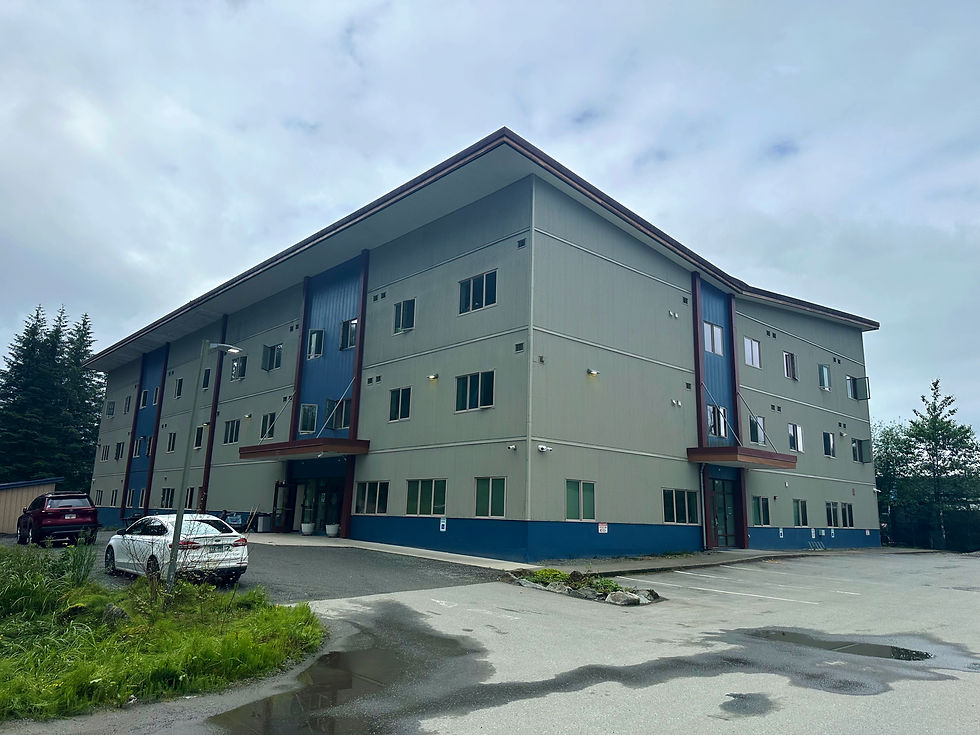
Determining which residents on the list move into Forget-Me-Not Manor first is based on who is considered the most vulnerable due to medical or other considerations, said Kaia Quinto, the collaborative’s executive director.
"The people that go to the emergency room five times a week," she said.
Homelessness has emerged as a dominant issue with city leaders due to a sharp rise in illegal activity reported two years ago at a campground designated for people without housing. That resulted in the Juneau Assembly approving a "dispersed camping" policy last year that also has been problematic since dozens of homeless campsites are now scattered across the city, prompting complaints from nearby residents and businesses.
A total of 326 people experiencing homelessness in Juneau were observed during the past year, according to the 2024 Point-in-Time (PIT) count and the 2025 Housing Inventory Count. A report by Deputy City Manager Robert Barr states there are about 400 emergency or transitional housing beds available — including Forget-Me-Not Manor — but in reality there is a consistent deficit of about 30 beds for people experiencing homelessness due to people not included in the PIT count.
The Assembly is expected to consider an ordinance next Monday making it easier for police to arrest homeless people for disruptive actions. Quinto, who became Housing First’s executive director a year ago, said at the time one of her primary goals is to provide more transitional and permanent housing rather than trying to patch things with short-term remedies.
The three phases of Forget-Me-Not Manor got millions of dollars in funding from the Alaska Housing Finance Corporation, Rasmuson Foundation, Alaska Mental Health Trust Authority and other partners. Quinto, during this month’s tour of the facility, said the next step towards providing such housing is to be determined.
"I don't know necessarily what's next, but I think we need to figure that out," she said.
White said she spent six or seven years living outside on Juneau’s streets, looking for "anywhere that was dry" to sleep. She said she was suffering from alcoholism most of that time, but got sober with help from Housing First and other officials three years ago and was approved for one of the Forget-Me-Not Manor rooms two years ago.
But it took many months before she actually lived in her new studio apartment full-time because of the transition difficulties.
"In that time I was in therapy, and that therapist was able and helpful for me to adapt from being outside to inside," she said. "The best way I can describe it is it’s like I had to be domesticated. I was a feral cat, and it was hard adjusting to inside with pets and love and food."
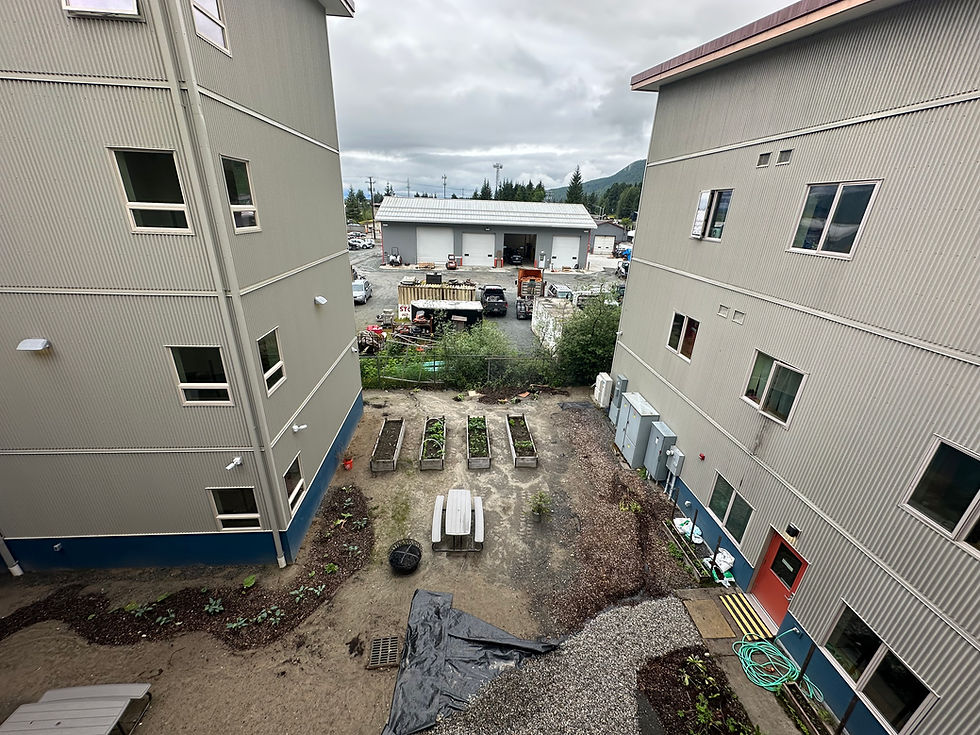
Forget-Me-Not Manor, in addition to the studios with self-contained kitchens and bathrooms, provides other facilities including free laundry rooms, a common room with a television and activities, and a backyard garden where social gatherings also take place.
"We do weekly group dinners where staff and tenants will cook," Brown said. "We're planning a barbecue for the Fourth of July here for tomorrow. We do big Christmas dinners where we all cook together. And we do a Secret Santa for Christmas where community members will adopt folks here."
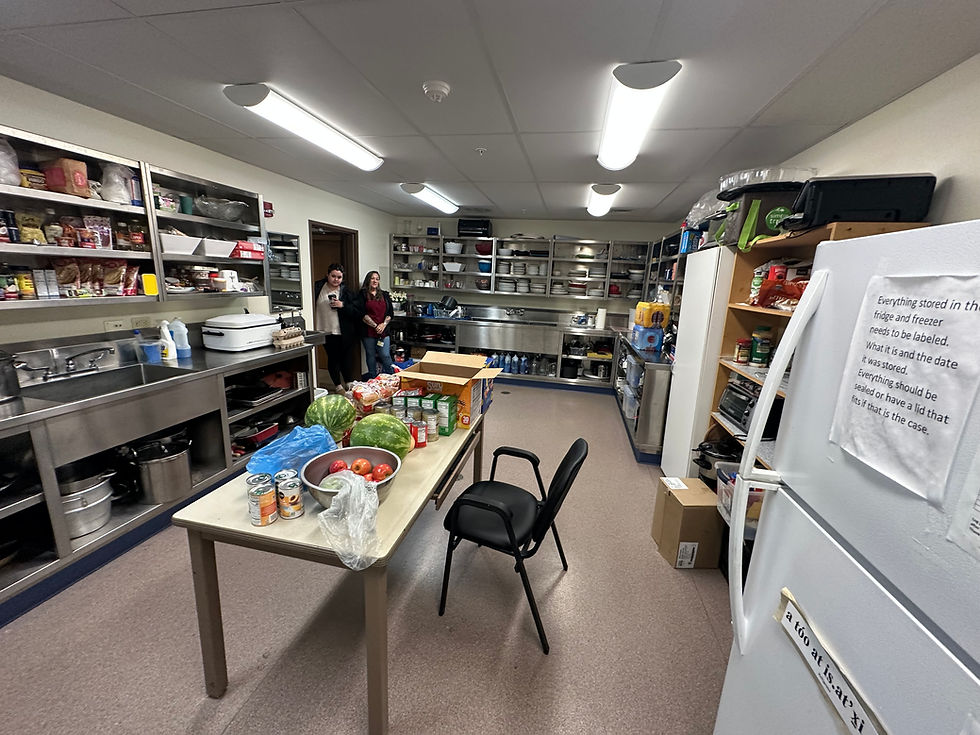
Residents obtain many of their furnishings, ranging from cookware to handmade quilts, with assistance from staff and community members who donate items.
Day-to-day help with shopping, obtaining services and care, and other activities is also provided to the residents — although they are responsible for the housekeeping of their studios.
"When they have a clean home it does really help build their morale and makes them proud of something," Brown said. "You see a difference in their mood."
Elizabeth Gray, the second resident to move into Forget-Me-Not Manor when it opened five years ago, was sitting in a conference room enduring a long wait on hold for help from a state social services agency during the early July tour. She said it took about a week to feel comfortable after moving in, when she started getting items such as pots and pans that provided a sense of comfort.
"I was on the street and all of a sudden I had a roof over my head, and I didn’t know what to do with it," she said. "Slowly, but surely, I got my TV going and my Roku."
Gray said she now knows most of the residents at the facility, as well as friends who come to visit, and has a proper appreciation for her third-story apartment.
"I’ve got a good view," she said. "I can see the bear dumping over the dumpsters."

White, while becoming comfortable living at the complex during the past two years, said she is still going through other adjustments after undergoing brain surgery recently that forced her to stop working temporarily. But she said her hope is to soon be able to help others going through the struggles she overcame.
"Being a peer supporter is going to be my next move is because now that I'm three years sober I feel more confident now," she said. "I actually have some proof to show, rather than me just repeating what they say at the meetings."
One of the most important aspects of being a peer counselor will be getting new residents to embrace the responsibility as well as the comforts of new housing, White said.
"If you want help this place makes it so there's no excuses because everything is offered," she said. "There’s food, they offer case management working, there's laundry, there is therapy, there is rides to the airport, they make food bank runs. So once you're in here there's no excuse for you to not be OK."
• Contact Mark Sabbatini at editor@juneauindependent.com or (907) 957-2306.


_edited.jpg)



.png)

.png)




.jpg)