.png)

Haines special ed teacher from abroad to leave after work permit denial

District will no longer pursue applicants who need visas to work due to difficulty of approval
By Rashah McChesney and Will Steinfeld
Chilkat Valley News
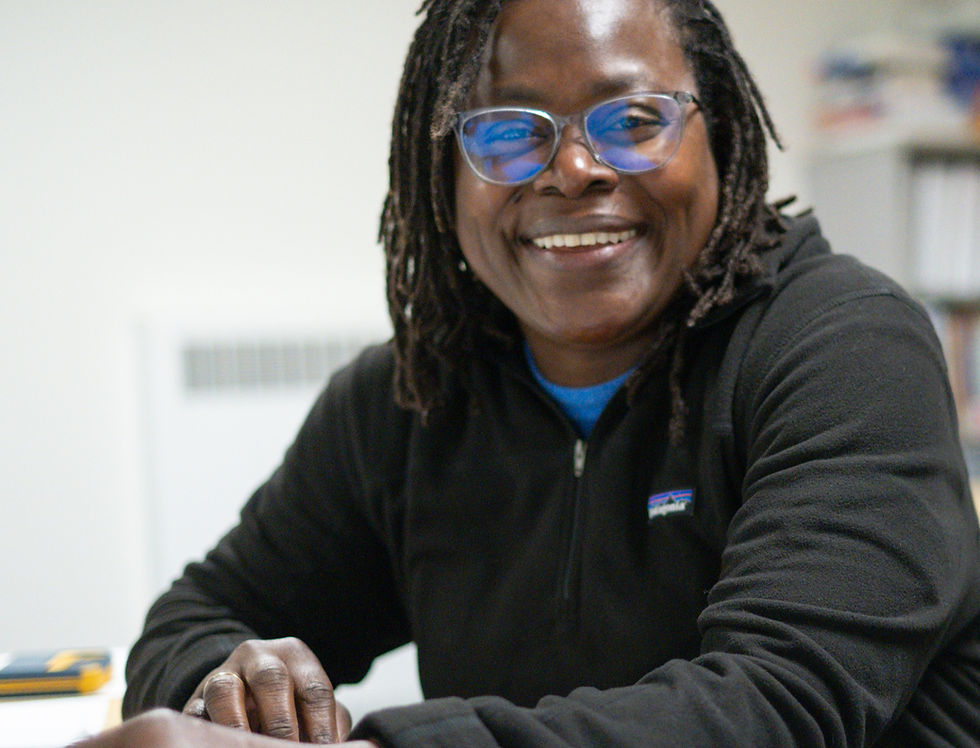
The Haines Borough School District’s newest special education teacher is leaving mid-year after her work permit was denied.
District officials say they will no longer be pursuing applicants who need visas to work as it has gotten more difficult to get them approved.
Stacey Spencer, who was born and raised in Trinidad and Tobago, first came to the U.S. in 2001.
She said she first came to the country for college, attending Tuskegee University in Alabama and Grambling State University in Louisiana, before she moved to Houston to teach. She said this summer that when she turned 50, she wanted to experience something new, so she moved to Alaska. She taught last year in Nome.
Spencer was reluctant to share many details about her specific legal status and situation, but said much of her life is now up in the air including how soon she must leave the country and where she will go.
“I was given the impression that this visa thing was going to work out,” Spencer said. “The district tried their best.”
When asked about the process of appealing the decision, Superintendent Lilly Boron said, “that has been our process for the past several months, going through the processes of appeal and petition.” The Haines Borough School District is relatively new at recruiting teachers requiring visas to work in the Chilkat Valley. Boron said the district has only ever had three teachers who needed visas, and she believes it’s the first time a teacher’s visa has been denied.
Boron has been vocal about the district’s hiring problems since she took over as superintendent in 2025. Haines and many other rural school districts across America are struggling to fill teaching gaps.
In some cases, rural Alaska school districts have relied almost solely on foreign teaching staff or hired immigration lawyers to help with the paperwork.
But Boron said over the last year, the paperwork has gotten more difficult to navigate.
“There are so many levels of bureaucracy to it and without a whole lot of success at this point,” she said.
The process is further complicated by the Trump administration’s proposed $100,000 fee on new H-1B visas for highly skilled foreign workers. Boron said she’s talked to administrators in other school districts in the state who could be significantly affected by the changes.
“I would say probably most districts are on hold,” she said. “As a whole, if the state can’t utilize teachers on a visa, if they can’t consider that as an option, then suddenly you have this loss of people who are filling a need in our educational workforce. It’s kind of an exponential loss because then the people you do have in the pool are now spread even thinner.”
At this point, Boron said the district will not recruit or hire anyone needing a visa to work.
“We just don’t have the financial resources to be able to do that,” she said.
She is unsure whether the school district will be able to replace Spencer this year.
“Special education teachers are hard to find,” Boron said. “There are so many open positions around the state. They’re in such high demand.”
She said the district is considering a combination of contracted services and paraeducators to fill the gap.
But she said it will affect the students.
“The students are sad and understandably so,” she said. “It’s never our preference to have to cobble together a solution for students in any situation. There’s relationship building there that is so important to our students, so when there’s turnover, that absence is felt. Spencer was just great for our students.”
Boron said having teachers and students in the school district from other countries enriches everyone’s lives.
“So we don’t just have this singular view and perspective. Our lives are enriched by the people who can come in and bring their culture, experiences and their perspectives. I always welcome that,” she said.
She also said it’s good for people to understand the impact of policy decisions on the ground.
“There’s a lot of time where you don’t know what to believe until you see how it impacts you locally,” she said.
Ultimately, Boron said she believes the district has a duty of care to the people it hires and brings into the Chilkat Valley.
“It’s a leap of faith to leave your country and to come and leave an environment that you’re comfortable with. I don’t take that lightly … it’s a gift to find somebody who is committed to kids,” she said. “It breaks my heart that we can’t keep her.”
Many in the community found out about Spencer’s sudden departure through a post on the Haines Glacier Bears’ Facebook page, which included photos of her saying goodbye to high school students, and thanked her for creating an inviting space for students in her classroom.
That post announcing Spencer’s departure was up for about a half-hour Tuesday before Spencer and Boron said they requested that district technology coordinator Sam McPhetres remove the post.
Boron, who said McPhetres generally has latitude to make posts without prior review, said she requested the take-down because she thinks posts about staffing changes should be vetted by administrators.
Spencer said she isn’t sure how the post could affect her status, and doesn’t want to draw too much attention to herself as she sorts out her next steps.
• This article originally appeared in the Chilkat Valley News.


_edited.jpg)



.png)

.png)