.png)

After 10 days of special session, opinions on gasline remain deeply divided and potential cost has doubled

Build-at-all-costs and avoid-at-all-costs testimony offered by residents to state lawmakers, who are also split on approving Alaska LNG Project legislation during 30-day session
By Mark Sabbatini
Juneau Independent
Ten days into a 30-day special session it’s been stated a natural gasline project might cost twice the $46 billion previously estimated and some Fairbanks residents are facing a 60% hike in their electric bills starting Monday.
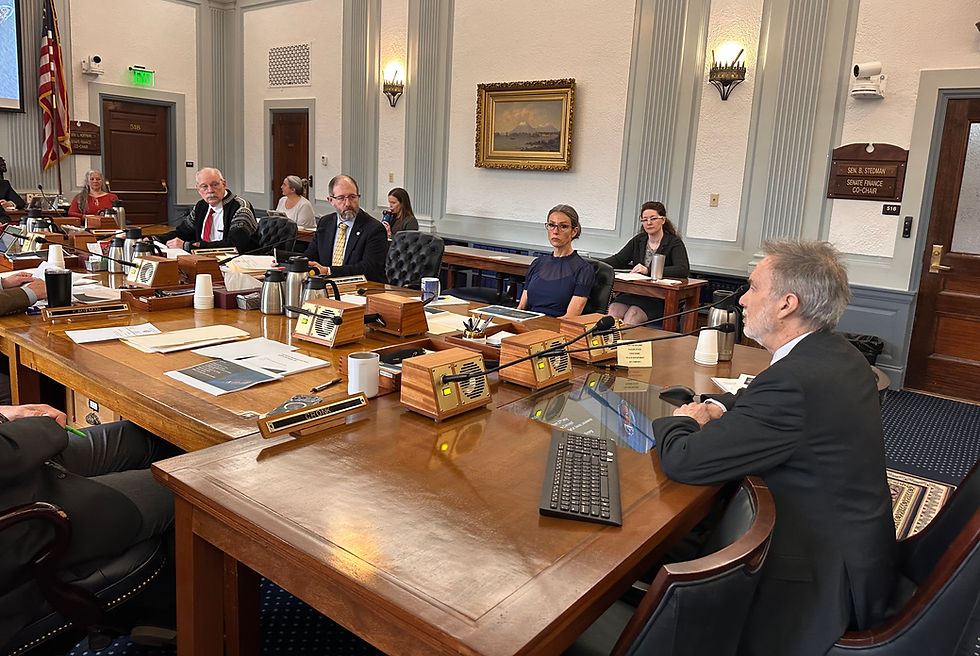
Big numbers like those are adding to the divisions and uncertainties about state lawmakers taking quick action during the remaining 20 days on the Alaska LNG Project that’s been discussed for the past couple of decades. So far the special session has mostly consisted of the House and Senate finance committees hearing presentations by stakeholders, with Alaskans getting their chance to weigh in during an afternoon of public testimony Saturday.
Some of the more than 50 people testifying told lawmakers to give developers anything they want to make a gasline happen — and not worry what revenue the state gets from it — for the jobs and lower heating bills that will supposedly result.
"I don’t care whether it’s eight cents or six cents or zero cents," said Josh Church, a Fairbanks financial planner and gubernatorial candidate Dave Bronson’s running mate, referring to state taxes involving the gasline. "There will be so many benefits beyond just the tax revenue to this state. You have the chance to be a hero or you have a chance to be a villain. Be a leader and let this bill go through. Pass this gasline."
Other residents argued there’s no way for the project to make practical or financial sense given its cost and the concessions the state would have to make, and questioned if it actually will result in cheaper natural gas for consumers. Skeptics also cited a state report published in February that 40.6% of Alaska’s oil and gas workers in 2024 were from out-of-state.
But a yes-or-no decision on a gasline isn’t as simple as such testimony suggests — and it’s also not what legislators are being asked to decide, said Rep. Sara Hannan, D-Juneau, a member of the House Finance Committee that hosted the public testimony meeting, in an interview Sunday.
"You try not to argue with public testimony and let people have their expression they will, but I did feel like many of those folks were ill-informed," she said. "We're not contemplating the bill that authorizes this project to go forward. It's a bill that is asking for all kinds of concessions that exist currently in statute and obligation to other oil industry taxes to be forgiven for one specific project."
Hannan said committee members are still getting their first full look at the complex — and in some ways unprecedented — web of economic and regulatory factors that could significantly affect the fate and fortunes of the state, developers, municipalities and consumers.
Dozens of hearings were held on the gasline during the regular session that ended May 20, but those were in committees other than the finance committees now hearing the proposed bills. House members also engaged in lengthy floor debate during the final days, but the current special session hearings are the first chance some lawmakers are getting to ask questions of state officials and the developers.
Sen. Jesse Kiehl, a Juneau Democrat on the Senate Finance Committee, said in an interview Saturday the opening portion of the special session was "sort of a reorientation" after being able to follow about half of the hearings on a gasline being considered by the Senate Resources Committee during the regular session.
"What I'm seeing is a mixture of some members who really want to do something to help the economics of this project and some members who believe the project is a fantasy," he said.
The 800-mile gasline from Alaska’s North Slope to the Kenai Peninsula, originally proposed in the early 2000s, is currently a venture being developed by the multinational Glenfarne Group, which owns 75% of the project, with the state owning the other 25% through the Alaska Gasline Development Corporation. Supporters hope it can provide gas to Alaskans by 2029, to overseas customers by 2031 and continue operating beyond 2060.
Among the key considerations:
• How much will the Alaska LNG Project cost? The $46 billion estimate was called "complete garbage" by Senate Finance Co-chair Bert Stedman, R-Sitka, last week and Alaska Department of Revenue economist Dan Stickel told the committee last Friday there could be a "100% cost increase" in that estimate. A higher cost means the operators will have to charge more for gas — potentially making it uncompetitive with other providers — and/or get more assistance from the state.
• How much money will the state and municipalities be asked to give up to make the project economically viable for its developers? Dunleavy’s proposal introduced in March eliminates 90% of property taxes on gasline-related infrastructure in exchange for a tax on gas that eventually flows through the pipeline (six cents per 1,000 cubic feet of gas, with House and Senate bills each proposing higher amounts). But Hannan said that is just one element of a proposed restructuring of both the amount and methodology for collecting taxes and royalties.
Also, she and other legislators — as well as some people testifying Saturday — expressed concerns the state will be asked by the developer to provide additional construction funds for the project while it's in progress — and risk losing both the pipeline and revenues from it if the state refuses.
A primary counterargument of Dunleavy and other project proponents is simple: If the pipeline isn’t built then nobody gets any money, and something is better than nothing. Supporters also argue there is a narrow window of viability in the current market to move forward on the project.
• Who will be the gasline’s customers? While there have been letters of intent and similar announcements about potential customers, lawmakers and other officials have noted that actual contracts are lacking as potential buyers wait to see if the pipeline and its ability to sell gas at a competitive price become a reality. Also, in addition to foreign entities and other major buyers, there are questions about a "spur line" to Fairbanks, which some residents are pleading for due to huge increases in heating fuel bills occurring due to supply issues and a surge in oil prices resulting from the Iran War. But some residents are skeptical, questioning if there will be any savings if the city (and thus local taxpayers) has to pay a significant share of the spur line’s construction costs and if fuel provided by the gasline isn’t competitively priced.
Both the House and Senate finance committees are scheduled to resume their hearings on Monday and, with less than 20 days left, face a tall order to craft legislation that can pass both chambers and get the approval of Gov. Mike Dunleavy, who ordered the special session.
Hannan said a deadline for members to offer amendments to the bill they are considering may be set this week, but it may take until next week when those amendments are considered. If the committee passes a bill next week it would then need to pass a floor vote — where another lengthy amendment process could occur — and then go through the same process in the Senate.
If the Senate makes changes to the House bill, then the House would either need to accept those alterations or a joint House-Senate committee would have to craft a compromise bill for both chambers to vote on.
The length and number of steps in the process are why some legislative leaders expressed skepticism at the beginning of the special session that a bill to advance the gasline could — or should — pass both chambers in 30 days.
Kiehl said the information collected so far during the special session has been useful since "the table is set for the most part" for the project’s developer "to come in and show some real data, some real numbers, to get some sort of tax consideration for the project."
"I think there are sane and responsible things we can do that don't give away the farm," he said. "Nothing we can do will make this project go if Asian buyers don't believe they can get LNG at a competitive price 20 years from now."
A short-term tax reduction at the onset that lets the developer recover pipeline construction costs, for instance, is an example of a proposal Kiehl said he could support.
"Concepts like a 90% property tax reduction forever is giving away the farm and so I'm not interested in that," he said.
Both Hannan and Kiehl said a key thing they still need to hear to move forward on proposals is more specific and complete information from Glenfarne about projected costs, earnings and other figures. Company officials are scheduled to make their cases to legislators this week.
"I’ve got to sit there and go, ’Well, this is complicated and I don't have a really in-depth knowledge of how this all works," Hannan said. "And again, the project can go forward under current law and there would be none of this. They say that the economics don't work. OK, that's the problem — the economics don't work, and you're not sure if you want to give us all the economic information."
• Contact Mark Sabbatini at editor@juneauindependent.com or (907) 957-2306.


_edited.jpg)



.png)

.png)