.png)
On The Trails: Avian preening behavior
- Mary F. Willson

- Feb 22
- 2 min read

By Mary F. Willson
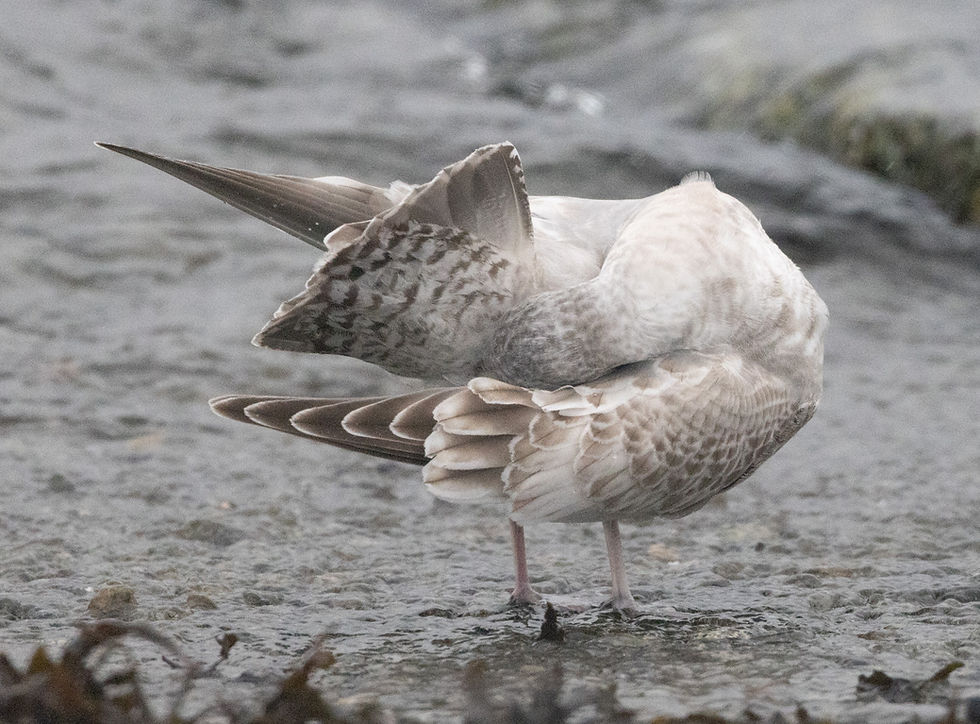
Birds typically take good care of their feathers, preening them frequently. This behavior is partly innate, but some of it is learned, by watching others or from experience. They commonly use their bills or their feet, maybe occasionally rubbing on a branch or a rock. This self-maintenance practice has several benefits for the individual.
For instance, it may remove ecto-parasites and debris from the plumage. In season, it can remove loose, molted feathers and settle the new feathers into place, improving insulation. Many birds have a special oil gland at the base of the tail and the bill is used to spread the oil on the feathers, for waterproofing; it also reduces ectoparasites in the plumage.
Wing feathers require special attention because of their importance for flight. Each feather is drawn through the bill, re-hooking the barbs that make the vane of the wing, making a functional surface for aerodynamic action. Fluffing up the plumage and shaking the whole body during a preening session also helps realign and re-hook the barbs.
Preening behavior also has social benefits. In courtship season, clean, snazzy plumage helps attract mates, by appearance and, in some cases, by enhancing flight displays. It also has a role in establishing and maintaining friendships between two individuals. When they preen each other, there may be some direct practical benefits, but some of it is comradeship (not just between mates), attending to each other. So we may see two birds grooming each other’s heads (and no doubt talking softly).
All that is pretty well known — within a species. So the published report in the literature of two birds of DIFFERENT species actually got a notice in a New York newspaper. Almost all of the reported sightings were of black vultures and crested caracaras, far to the south of New York. The caracaras sometimes invited the attention and the vultures did most of the work, the caracaras occasionally reciprocating, but the vultures could also initiate the interaction. This interspecies preening behavior has been reported in one other case (between two babblers in China), although more cases may turn up. Researchers are still mystified by such behavior and are hoping to learn of more such interactions. In the case of the black vultures, could they be functioning as "cleaners," similar to the cleaner fish that service other fishes by removing parasites and such? More to be learned, as usual.
Other animals preen too, themselves or each other — cats, monkeys and certainly humans. However, judging from TV commercials, human preening is much less about self-maintenance (hygiene, health, comfort, etc.) than it is about visual and olfactory appearance, all supported by and encouraged by a huge industry.
• Mary F. Willson is a retired professor of ecology. "On The Trails" appears periodically in the Juneau Independent. For a complete archive of Mary Willson’s “On the Trails” essays, go to https://onthetrailsjuneau.wordpress.com.