top of page


.png)

On The Trails: Dike trail observations and nuthatches
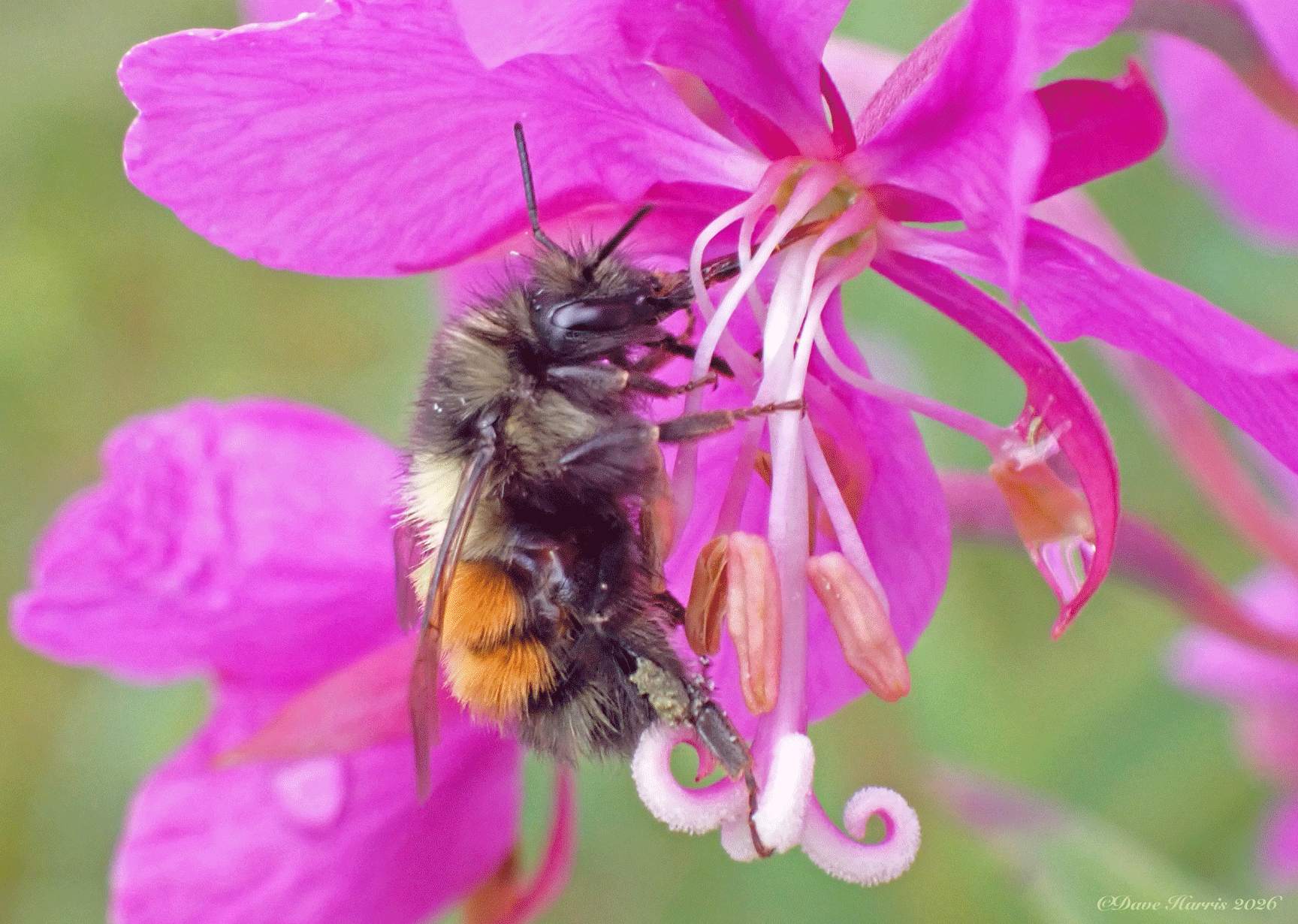
A stroll along the dike trail in late-mid July was replete with nice observations. As readers know, I’ve been concerned about our local bee populations, with just spotty reports of abundance. On that stroll, however, we found over 150 bees on fireweed, all along the trail, plus an occasional one on yellow rattle and fragrant white clover. Possibly encouraging news??
Jul 263 min read


On The Trails: Two little mysteries
One fine, sunny day in mid-July, I strolled around at the Jensen-Olson Arboretum. I usually see something of interest there. I was amused by a sign saying “asparagus” that seemed to guard a large stand of tall foxglove. If I looked closely, however, there really was a delicate sprig of mature asparagus, almost hidden by the leafy foxglove.
Jul 193 min read


On The Trails: Gunnels and others
Gunnels are small intertidal fish, very slender, bearing a long dorsal fin. They are unusually slimy; that mucus coat protects them from dehydration when the tide goes out. They can breathe air through the skin for hours.
Jul 123 min read


On The Trails: Summertime fun
In the midst of trying to prepare for the coming jökulhlaup, there have been some bright spots.
Jul 63 min read


On The Trails: Summer is here
It’s the time when juvenile songbirds appear, fully fledged and flying well: crows, robins, hermit thrushes, juncos, etc. It’s also mosquito season — they found me as soon as I stepped out of the car to walk on the dike trail.
Jun 213 min read


On The Trails: Early June observations
As I started on the dike trail, I noticed a few photographers all focused in one direction. Just then, I met some old friends who asked "Have you seen that flycatcher?" My response was "Flycatcher? What flycatcher?"
Jun 143 min read


On The Trails: Ducks, midges, and flowers
The first little mallard ducklings have been appearing on ponds around town.
Jun 73 min read


On The Trails: Spring in late May
On a recent semi-sunny day, I ventured down the badly pot-holed access road to the trailhead for the wetlands at the end of Industrial Boulevard. Elderberry shrubs bore a few inflorescences with open flowers and more to come soon.
May 313 min read


On The Trails: Basin Road, jumping mice, calypso orchids
On a recent chilly, drizzly day, I ventured up Basin Road with a friend. The flume trail was not available, due to some work project. Our time was limited, so we stuck to the road, up and back.
May 243 min read


On The Trails: On the Outer Point Trail
On a day in mid-May with alternating sun and showers, a friend and I took a stroll on the Outer Point Trail. Our original intent was a walk on the Rainforest Trail, but that idea was jettisoned vigorously and immediately upon seeing a horde of tourists beginning a guided tour there. The Outer Point Trail was ours for a time, and a few others came later.
May 173 min read


On The Trails: Swifts, toads, and others
Here in Southeast, two species of swift reach the northern extent of their breeding range, although they are not common here.
May 103 min read


On The Trails: Spring has sprung
The snow is still thick on the ground in some places and my pond still has a lot of ice. The small alders that grow at the pond edge were bent double by those heavy snows and still have their tops locked in the pond ice. Pairs of mallard visit the pond every day, foraging around the edges and on the fallen seeds on the ice. Other spring things are happening too!
May 33 min read
bottom of page