


.png)

On The Trails: Summertime fun

By Mary F. Willson
In the midst of trying to prepare for the coming jökulhlaup, there have been some bright spots.
On my home pond, a female mallard and her brood have visited frequently. Her seven young ‘uns are fully feathered and big — almost as big as mama. Several well-grown juveniles have joined the adult yellow-rumped warblers that have been peanut-butter junkies all season. And the juncos have also done well; there are juveniles of various ages from several families making use of the feeders. Not to mention the hummers — numerous juveniles contend for the nectar.
When I looked out my front window one morning, I noted a big black lump at the base of a tree across the pond. The black lump became a bear, scrambling up the trunk of a tall spruce. I hadn’t seen a bear in my front yard for several years, so this was interesting and I dropped everything else to watch. The bear went up the trunk to where the pulley system that suspends the seed feeder is attached to the tree and spent a few minutes messing about with the pulley (it survived). Then on up the tree it went, until the trunk was only a few inches in diameter. Oooops, now what?? The bear fidgeted around for a bit, checking out neighboring trees, which were too far away for it to reach, and began the descent — backward, one foot at a time, stopping every few steps to chew a twig and look around. The descent took far longer than the ascent, but eventually its feet found the ground and it ambled off toward the campground. I think it was a young one, maybe a two-year-old. Fun!
At Kingfisher Pond, the redwings are feeding fledglings. A male took a break from singing to deliver a load to a kid in the tall vegetation. A photographer with a huge lens on the camera was standing in one spot for longer than it took for us to circle the pond. That camera was aimed at a tree-swallow nest box, with one chick sitting in the doorway. Two bigger chicks had already fledged and this one was seemingly reluctant to make the big move into the open air. Adult swallows were swooping about, possibly trying to encourage this pokey one.
On the Crow Hill trail, as we entered the big meadow, we were greeted by loud calls of a greater yellowlegs. It chased a raven briefly and then directed its attentions to us. Calling indefatigably, the parent bird must have had chicks down in the meadow vegetation somewhere. They were well warned of possible danger — and we were clearly told that we were not welcome. On the way down, we particularly enjoyed the many flowers of sticky false asphodel (genus Triantha, formerly Tofieldia). It earns its name with sticky hairs on the stem that capture small insects that the plant digests. Another carnivorous plant, recently confirmed a few years ago.
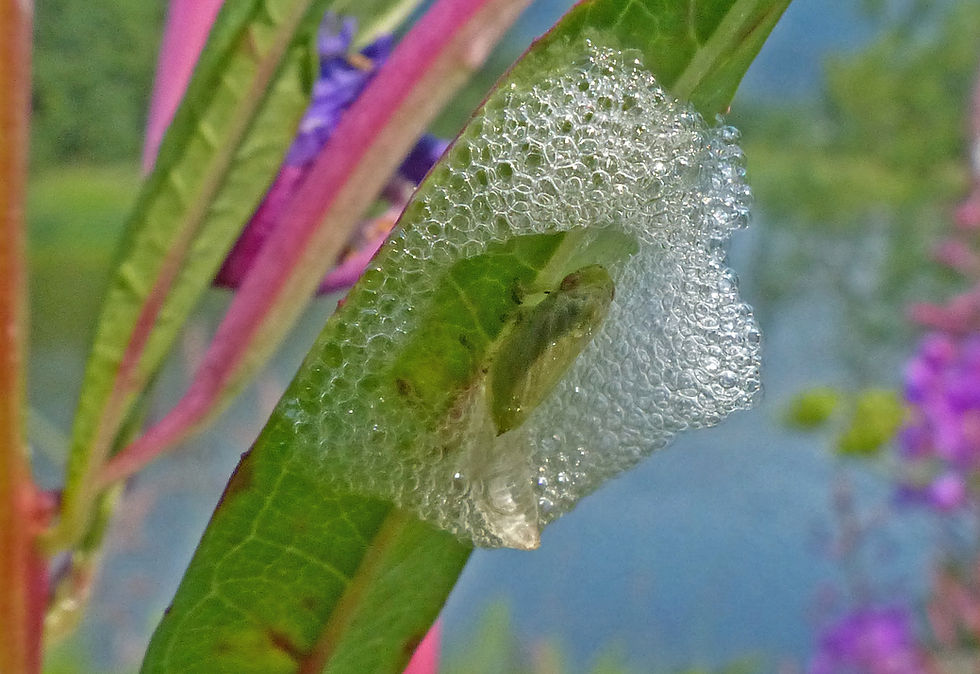
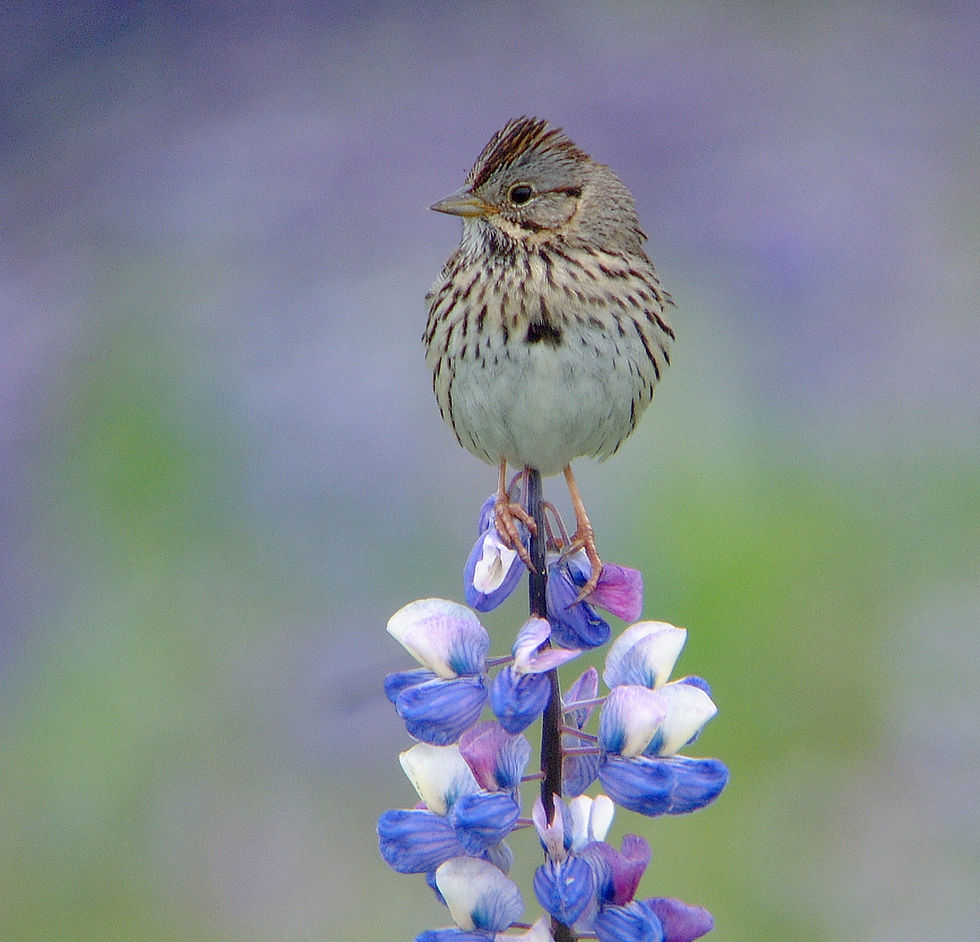
A slow stroll at Fish Creek produced a singing Lincoln’s sparrow, a song sparrow, and (I think) a Wilson’s warbler. King salmon had come in, attracting eagles and human predators. Thimbleberry was flowering profusely and starting to set fruit. Strawberry plants were blooming too, somewhat later here than elsewhere. The roses had bloomed, shedding their pink petals. Fireweed would bloom soon. And I saw one yellow paintbrush in bloom. Many plants along the trail were infested with spittlebugs, their foam sometimes wiped off on the passing legs of dogs and humans. The nymphs of these insects feed on watery fluid as it rises through the xylem of the plant from the ground, extracting sufficient nutrient by means of symbiotic bacteria in the digestive system. The bugs excrete the excess water, mix it with some sticky stuff, and pump air into the mix, which is blown out of the rear end, making the foam. In small numbers, they are reported to do little harm to the plants, but in large numbers, they can cause some problems, but not usually lethal to the plant.
• Mary F. Willson is a retired professor of ecology. "On The Trails" appears periodically in the Juneau Independent. For a complete archive of Mary Willson’s “On the Trails” essays, go to https://onthetrailsjuneau.wordpress.com.


