.png)

Trump’s latest elections order is an unlawful assault on Alaska’s elections


By Bruce Botelho
On March 31, President Trump issued a new executive order on citizenship records and mail‑in ballots entitled “Ensuring Citizenship Verification and Integrity in Federal Elections.” The order has nothing to do with election integrity — the name is like “Newspeak,” Orwell’s fictional language for a totalitarian state. It is an unlawful attempt to seize control of how Alaskans vote and to make an error‑ridden federal database the gatekeeper of our ballots.
Ever since statehood Alaska has built an election system that reflects our geography and our values. By‑mail and absentee voting are not mere conveniences here; they are how thousands of our neighbors who live in remote areas accessible only by air or sea participate in democracy at all. Yet the president now proposes to tell Alaska when and to whom we may send ballots by mail, based not on Alaska law, but on whether a voter’s name appears on a new federal “citizenship list.”
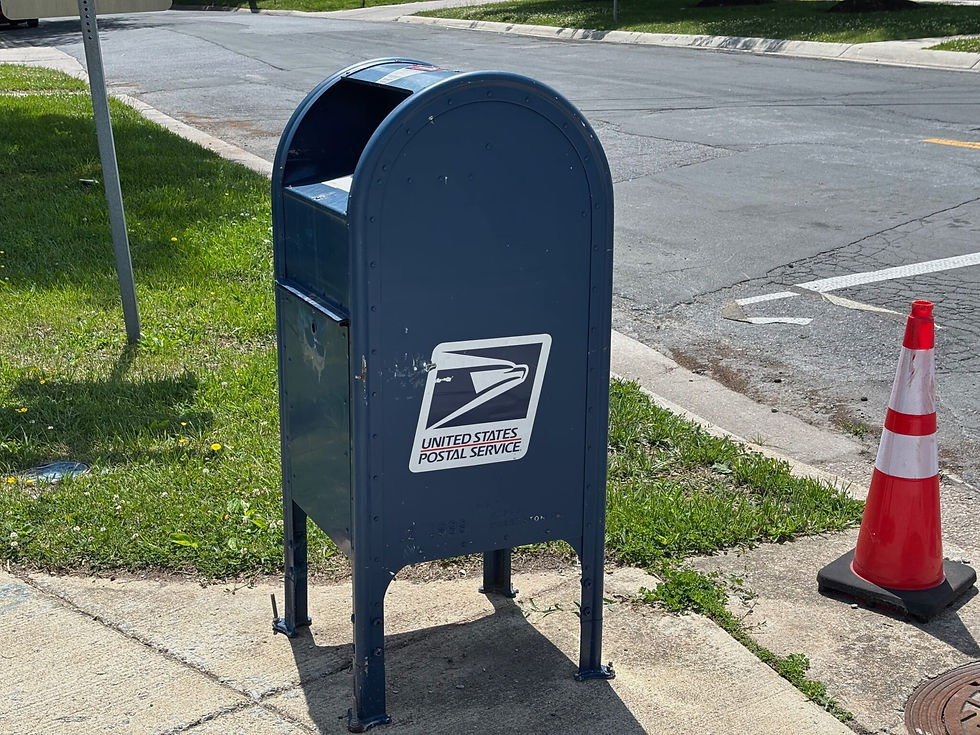
The order directs the Department of Homeland Security to compile state‑by‑state rosters of presumed U.S. citizens eligible to vote in federal elections and then directs the Postal Service to withhold mail ballots from anyone not on those lists. In one stroke, the president purports to rewrite who may receive a ballot by mail, how ballots travel through the postal system and which government gets the last word on whether an Alaskan can vote. That authority does not belong to him.
The U.S. Constitution is explicit in this matter. It reads in pertinent part: “The Times, Places and Manner of holding Elections . . .shall be prescribed in each State by the Legislature thereof; but the Congress may at any time by Law make or alter such Regulations . . .” Alaska’s Legislature has determined who may vote absentee, how those ballots are requested and mailed, and how they are counted. An executive order that conditions ballot delivery on a federally controlled citizenship list displaces those laws with presidential preference. That is not faithful execution of the law; it is legislation by directive. And it is patently unconstitutional.
The order also collides with bedrock principles of federalism. The federal government may not simply commandeer state election officials or local postmasters to administer a new federal scheme that overrides state choices about mail voting. By insisting that Alaska adapt its procedures to match a federal citizenship database that we did not design, do not control and cannot effectively challenge, the administration seeks to turn state election workers into unwilling agents of a national policy they never adopted.
Even if the president had such power—which he does not—the policy itself is dangerously unsound. The citizenship records he proposes to rely on are notoriously unreliable. Federal and state databases routinely misclassify naturalized citizens as non‑citizens, lag months or years behind status changes, and contain basic errors in names, dates of birth and addresses. Tying ballot delivery to a single “State Citizenship List” assembled from these imperfect sources is a recipe for widespread disenfranchisement.
Those errors will not fall evenly. Naturalized citizens, Alaska Natives whose names and records do not conform to federal bureaucratic expectations and rural voters with inconsistent or non‑standard addresses are all especially vulnerable to being left off or misflagged in a national database. If the Postal Service is instructed not to send a ballot unless it can confirm a match on that list, many eligible Alaskans will simply never receive a ballot at all.
In urban areas, some voters might fall back on in‑person early voting or Election Day polling places. In much of Alaska, that is unrealistic. An elder in a village accessible only by plane or boat, a deployed service member relying on an overseas ballot or a college student temporarily out of state cannot easily “work around” a missing ballot. For them, the executive order does not mean extra paperwork. It means no vote.
The order also offers no meaningful, timely remedy for those wrongly excluded. By the time a voter discovers that no ballot has arrived and tries to untangle why their name is missing from a federal citizenship list, the election may be over. We will never know how many voices were silenced by database error rather than voter choice.
Alaska has used absentee and by‑mail voting for years without any evidence of widespread non‑citizen voting or ballot fraud. Our challenges are logistical, not criminal: weather, distance and infrastructure, not hordes of ineligible voters swamping the polls. Imposing a rigid, centralized federal screen on top of that system does nothing to address real problems, and threatens to create a new one that is far worse: a loss of confidence that ballots will arrive at all.
Let’s not attempt to dress this order up as a mere “data‑sharing” exercise rather than the federal takeover it truly is.
• Bruce Botelho served as Alaska's attorney general under both Govs. Wally Hickel and Tony Knowles. He also served four terms as mayor of Juneau, where he was born and currently resides. He is also the president of the Juneau Independent’s board of directors. This column was written for and originally published by the Alaska Beacon.