


.png)

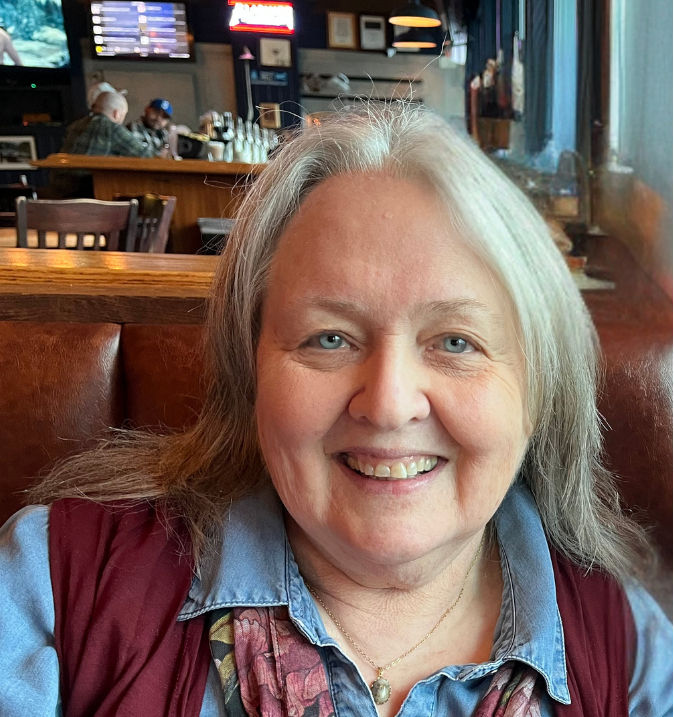
Obituary: Dr. carolyn Virden Brown
Dr. carolyn Virden Brown of Juneau passed away on Tuesday, Jan. 27, 2026, at the Anchorage Pioneer Home. She was predeceased nine years earlier by her husband of 52 years, Dr. George W. Brown.

Dr. Brown was born in Plainview, Texas on Nov., 21, 1937. Dr. Brown spelled her first name with an underlined lowercase “c” because that is how it appeared on her birth certificate. Her parents were tenant farmers. Her mother was dyslexic and left school in third grade, her father left school in sixth grade. Nonetheless, carolyn was a curious student and excelled in school. Her parents divorced when she was 10 and soon thereafter, she was raised by her paternal grandmother Alice, whom she respected very much.
When she was five, she contracted polio and was hospitalized. As the child of a tenant farmer, carolyn worked in fields picking cotton and harvesting a myriad of crops. Her father served as a Marine during World War II and then worked in the Texas oil fields where he lost a leg during an accident on a derrick. Her own experience with polio and seeing the challenges that her father faced after losing a leg, led carolyn to pursue a career in medicine. The first member of her family to complete high school, carolyn, graduated as Valedictorian from Hereford (Texas) High School in 1956.
She earned a B.A. in Chemistry from Harden-Simmons University in Abilene (Texas) in 1960 and then went on to Bowman-Gray School of Medicine at Wake Forest University in Winston-Salem, North Carolina. She was accepted to prestigious medical schools, including Baylor and Vanderbilt and chose Wake Forest because it was affiliated with the Southern Baptist Church.
In the cadaver lab at medical school, carolyn met her future husband, George Brown. They found they shared many interests as well as the same exact birthday. During medical school, carolyn traveled to Africa and worked for a summer at the Machame Lutheran Hospital in Tanzania, East Africa. George and carolyn were married a few days before they graduated from medical school on June 5, 1964.
After completing her medical internship, she and George accepted commissions in the U.S. Public Health Service in Anchorage Alaska. There, carolyn served for three years as the Assistant Chief of Outpatient Services and Field Health. While in this role, she also served as the Coordinator of the Poison Control Center at the Alaska Native hospital in Anchorage. In addition, she developed an Alaska Native Health Aide training program to support health needs in rural Alaska communities.
George and carolyn’s two children, Rachel and Ben, were born in Anchorage. In 1968, carolyn and George and their young family moved to Hawai’i for two years where carolyn completed a residency in Preventive Medicine and a Master of Public Health degree at the University of Hawai’i. She earned board certification in Preventive Medicine a year later.
After the family returned to Alaska in 1970 carolyn focused her career on Alaska’s Public Health needs. She served as the Chief of Community Health Epidemiology at the Alaska Native Health Services in Anchorage. She also helped to create the free Open Door Clinic in the Fairview neighborhood of Anchorage and served as its Medical Director and served as the Medical Director of Alaska’s first Narcotic Drug Treatment Program (Methadone) clinic. Her work during the early 1970s coincided with momentous changes in Alaska’s growth as a state, including enactment of the Alaska Native Claims Settlement Act (ANCSA), the construction of the Trans-Alaska Pipeline, the Alaska National Interest Land Conservation Act (ANTLCA), and tremendous population growth. This was a time of very significant change in Alaska, and she noted how women’s healthcare was routinely ignored.
Based on this observation, carolyn decided to return to the University of Hawai’i and complete a residency in Obstetrics and Gynecology (OB-GYN). While completing her residency, she promoted preventive medicine and support for indigenous and underserved populations, including rotations at clinics in other Pacific islands such as Saipan.
In 1978 the Browns returned to Alaska and carolyn, an obstetrician, and George, a pediatrician, set up a not-for-profit medical practice in the Mat-Su Valley, Women’s and Children’s Health Associates. As they once described it, both were present in the delivery room when a baby was born. carolyn, the obstetrician, delivered the baby and handed it to George, the pediatrician. She delivered over 5,000 babies.
Their Palmer medical practice included many additional firsts. carolyn was the first woman physician to practice at Palmer’s Valley Hospital where she conducted the first-ever cesarean birth procedure and later became Chief of Staff and Chief of OB-GYN. In 1981, she earned her board certification and became a Fellow of the American College of Obstetricians and Gynecologists (ACOG). Her medical practice sought to provide health care to women from all backgrounds, regardless of ability to pay. She accepted unique forms of compensation such as moose, bear, and caribou meat as well as works of art.
One of carolyn’s aims was to provide health care for women in rural areas of the Mat-Su Valley where no such services existed. She did this by setting up mobile health clinics for women, using sites such as the Talkeetna Roadhouse. She offered routine health care to all women who came there. Alongside Dr. Brown’s clinical work in the 1980s, she also served as a Clinical Instructor for the University of Washington Medical School, providing on-site instruction for medical students in the Washington-Wyoming-Alaska-Montana-Idaho (WWAMI) program. Additionally, she served as the medical director of Alaska Planned Parenthood from 1984-1988.
carolyn found she enjoyed teaching WWAMI students. That led her to make the bold choice to take a faculty position at the University of Vermont (UVM) Medical School in 1988. She served as an Assistant Professor of OB-GYN at UVM for six years with appointments on the Admissions Committee and as the Resident Education Coordinator. While teaching at the medical school, carolyn created a course in medical ethics and developed a community health center in Enosburg Falls, Vermont. At the same time, she became involved in obstetrics on a national level. She chaired the ACOG National Task Force on Primary/Preventive Care for Women, resulting in clinical guidance for all ACOG members.
carolyn was also a member of the National Academy of Sciences Institute of Medicine Committee on Primary Care and co-authored the publication: Primary Care – America’s Health in a New Era in 1996. From 1992-2000 she served on the editorial Board of the journal, Female Patient and for five years (from 1995 to 2000), she was the Medical Director of college student health at Johnson State College in Johnson, Vermont. She also served for two years on the National Women’s Health Network Board of Directors and for four years on the Vermont Governor’s Commission on Women.
Dr. Brown’s notable local, state, and national accomplishments were recognized by colleagues in Alaska. In 2001 she was recruited to serve as the Deputy Director for Public Health for the State of Alaska. This new job brought carolyn back to Alaska, this time to Juneau where she was the Region X representative to the American Public Health Association governing council.
A change of administration in 2003 led carolyn to open a small private practice in Juneau which she operated until 2004 when she and George moved to Suna-Migori in Kenya where carolyn was the Medical Director of the Matoso Clinic run by the Lalmba Association. In the Matoso clinic George concentrated on caring for children and carolyn delivered babies and worked to improve women’s reproductive health. Much of their work included treating patients with HIV, especially many children.
The Dr. Browns returned to Juneau in 2006 where carolyn resumed a limited private practice until 2014 when she retired. Dr. Brown remained active in retirement until her death. Working from her home office, she participated in many civic, health, and wellness efforts in Juneau and Douglas, in Alaska and in the nation. These included the national and local League of Women Voters, the American Association of Retired Persons (AARP), and the Juneau chapter of the Alliance for Mental Illness, Inc. (JAMHI). Through her work with the Alaska League of Women Voters, she arranged a grant to distribute copies of a book and video about one of her heroes, Elizabeth Peratrovitch, to all Alaska schools. Dr. Brown’s many accomplishments and contributions to Alaska were recognized in 2023 when she was inducted into the Alaska Women’s Hall of Fame.
Dr. Brown is survived by a daughter, Rachel Brown-Chidsey, Ph.D., Associate Professor of School Psychology at the University of Alaska Anchorage, and a son, Ben Brown, J.D., an attorney for Alaska Child Protection Services and an active member of Perseverance Theatre in Juneau, and a granddaughter, Eleanor Chidsey who is preparing to become a teacher. She had a genuine gift for friendship and is also survived by her many friends from high school, college, church, medical practice, community service, and life. Memorial services in Juneau and Palmer are planned for summer 2026. In lieu of flowers, donations can be sent to an organization of your choice that supports women’s health or to Women’s and Children’s Health Associates at P.O. Box PO Box 20113, Juneau, AK 99802.



_edited.jpg)


