


.png)

On The Trails: Eating spruce needles

By Mary F. Willson
Spruce needles are loaded with nasty chemicals; some of them toxic and consumers must have a physiological way to avoid the toxic effects. And mature needles are tough, not easily digestible. Who would want to eat such a diet??
Red squirrels and humans do so by choosing buds and young shoots, which are less tough and in which the defensive chemistry is not fully developed. Humans use those "spruce tips" for tea, syrup, jelly, and seasonings. They can be a good source of vitamin C, also providing vitamin A and various minerals. But they are only available in spring, when the trees produce their new growth.
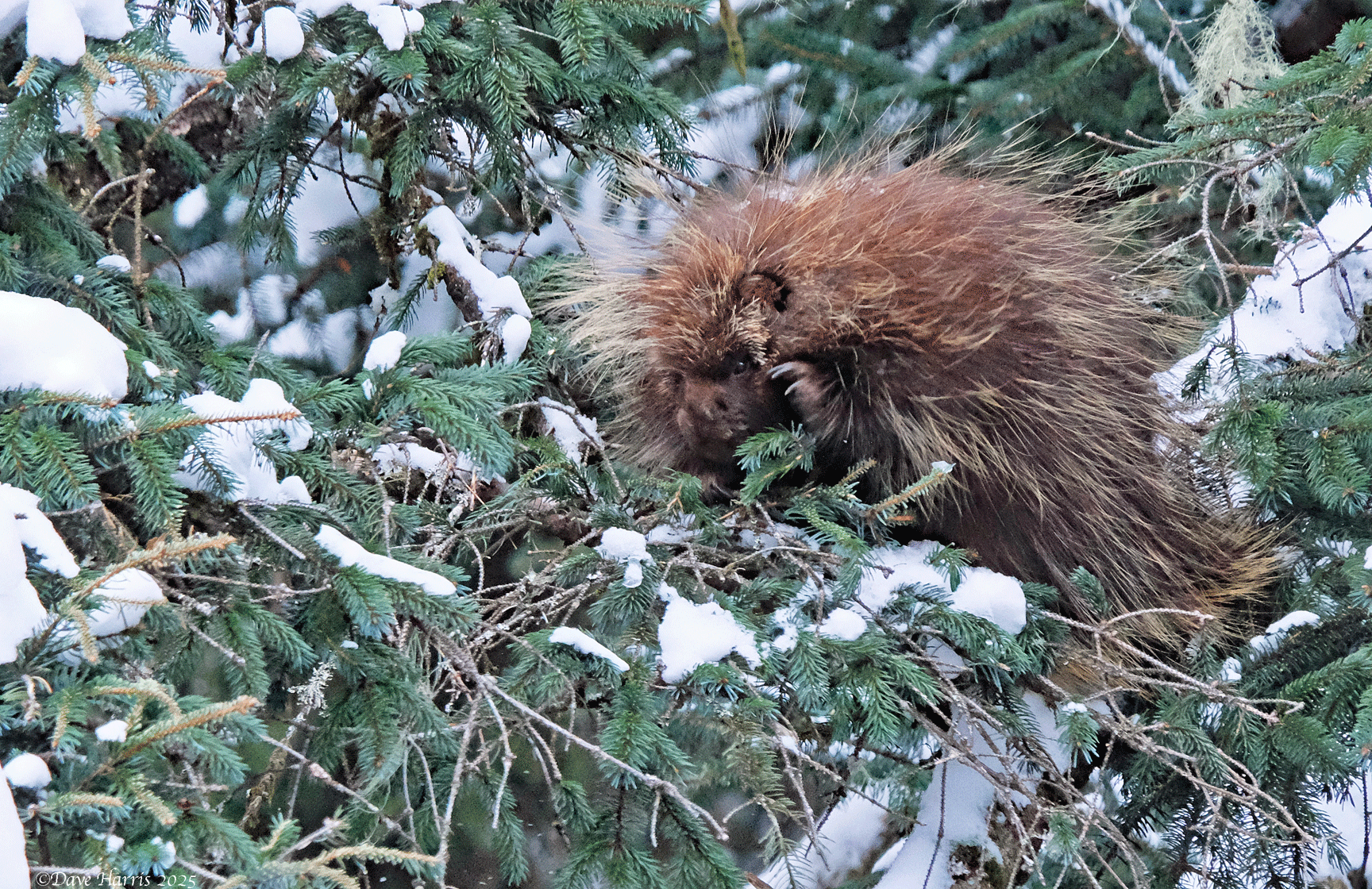
Who eats the mature needles? Snowshoe hares include them in their winter diet, cutting off twigs at a sharp 45-degree angle from branches close to the ground (or snow). So do moose, tearing off twigs and small branches, reaching up as much as 14 feet. Porcupines consume spruce needles too, sometimes climbing to great heights to do so. Some readers may recall my report of watching a porcupine climb up a very tall spruce, maybe a hundred feet tall or so, and then bite off and eat the needles and bark from the small branches near the top. I think that maybe it wanted the younger needles that can be found on the newer growth up there, handy to grab from the main trunk. That tree still shows gaps in the upper branching, where that porcupine was busy.

Spruce grouse are well-known to consume lots of spruce needles, especially in winter, and they can store lots of needles in their crop. They clip off the needles, leaving short stubs on the twig and can harvest needles from any height on the tree. They reportedly can be quite selective of which individual trees they use for foraging, possibly related to nutritional value in some way.
Those consumers have special anatomical arrangements for dealing with the tough materials of mature needles, as I’ve mentioned in another essay for bark-eaters (and most of the consumers just mentioned eat bark as well as mature needles). Moose chew the cud, recycling what was ingested; hares, spruce grouse, and porcupines have a cecum full of symbiotic microorganisms that process the material.
One might think that the sharp points on mature spruce needles would stab the tongue and mouth linings, but so far, I have found no indications that the sharp points of spruce bother the consumers.
Eating spruce needles in winter has direct relationships with reproduction of some species. The young of most animals are born in spring, when a flush on fresh resources provides the energy and nutrients for reproduction. For moose and porcupines, the reproductive process begins in fall, with courtship and competition for mates. Females are therefore pregnant through the winter when spruce needles are an important food.
The gestation period for moose is about eight months long, so needle-eating by female moose contributes to embryo development to some degree. The seven-month gestation period for porcupines, fueled significantly by spruce needles, is unusually long for a rodent. Development is quite slow, fueled in a major way by spruce needles.
Those observations raise questions: If spruce needles are indeed relatively poor fare, do pregnant female moose and porcupines tend to include less spruce and more deciduous species in winter (compared to males and non-pregnant females)? Is the unusually slow development of porcupine embryos linked to eating a tough diet of lots of needles?
• Mary F. Willson is a retired professor of ecology. "On The Trails" appears periodically in the Juneau Independent. For a complete archive of Mary Willson’s “On the Trails” essays, go to https://onthetrailsjuneau.wordpress.com.


