


.png)

Little Naax̲éin Weavers learn traditional Chilkat weaving


By Gretchen Wehmhoff
The Skagway News
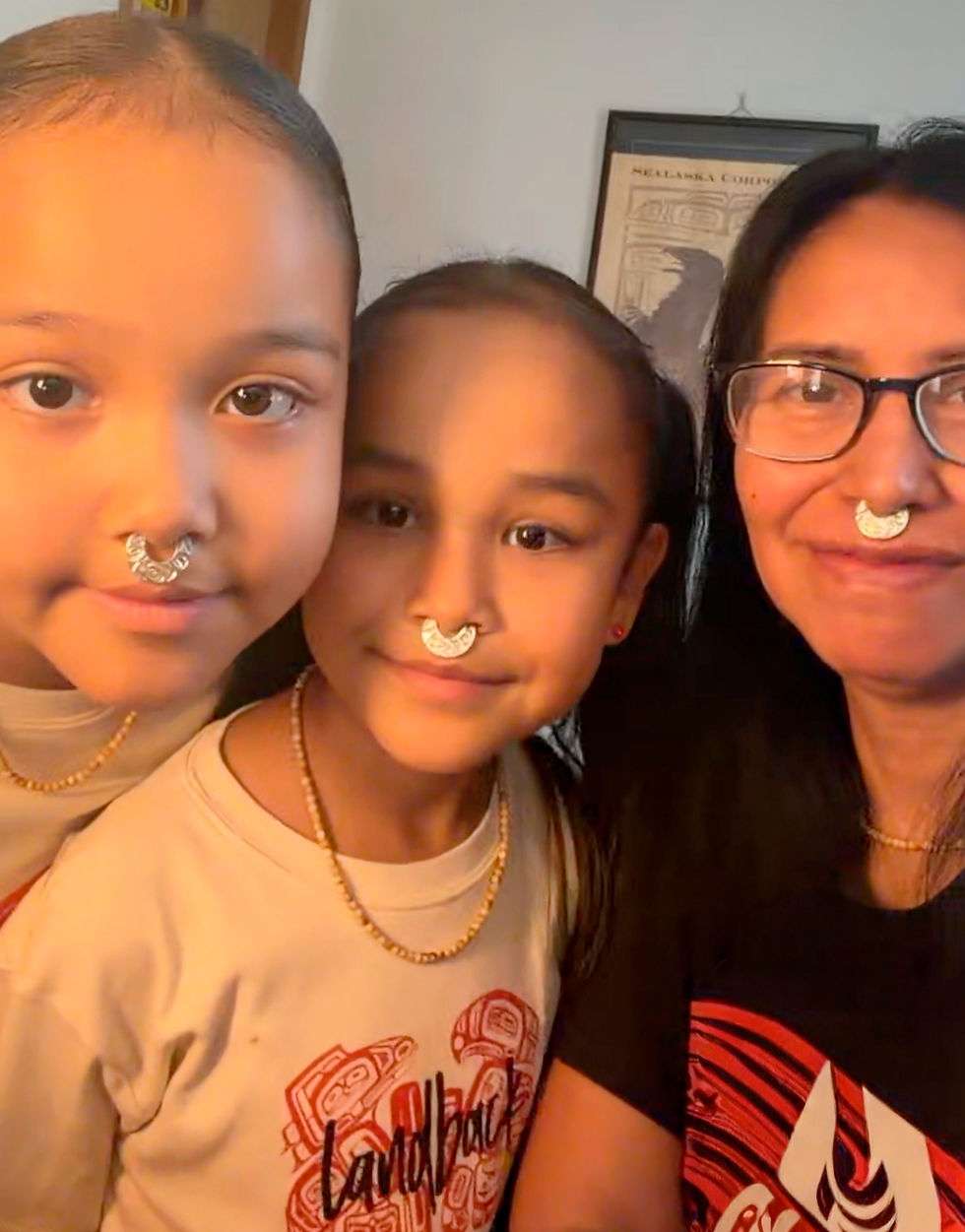
Isabella Ross and Patricia Dennis started weaving grass in the backseat of their grandmother Marion Carman’s car, while they were sightseeing for bears.
They had picked some of it up on TikTok after seeing traditional cedar hats. They soon told Carman they wanted to weave cedar hats. The girls continued to show an interest in weaving, so when Carman saw that well-known weaver Donedin Jackson was doing exhibition weaving through a summer program near the Goldbelt Tram, she decided to introduce the girls to the weavers.
Carman, who homeschools her granddaughters, has been teaching the girls Língit and Haida for about a year. Speaking in Língit, the girls said hello to Jackson. Jackson responded by showing them more about her current weaving project, a Naax̲éin Chilkat Robe. Goldbelt hired Jackson and Rae Mills to complete this two-year project.
The robe tells a story and depicts a female killer whale diving.
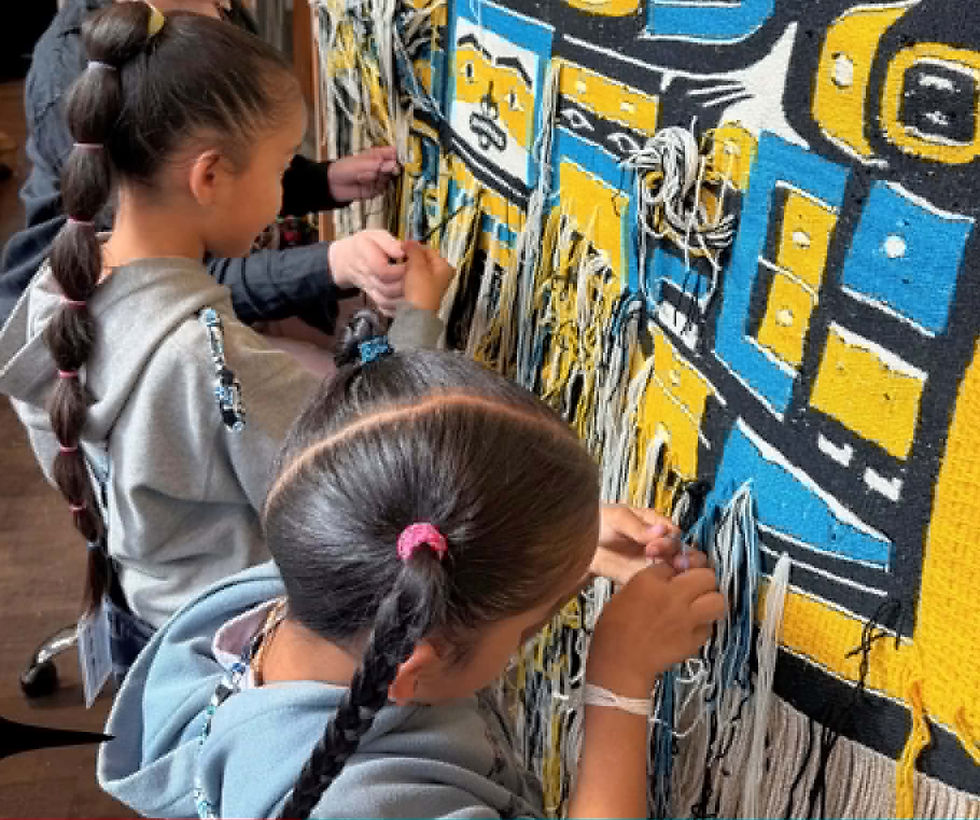
Marion says the robe represents the killer whale (kéet) clan, the same clan she and the girls belong to, as well as Donedin.
Carman shares that the family comes from Tlingit and Haida clans.
“I have Raven on the Tlingit side and Haida Eagle on my grandmother’s side,” Carman said.
Carman’s grandparents, Si and Dorothy Dennis of Skagway, have been involved in caring for and preserving Haida and Tlingit culture in Southeast Alaska, specifically Skagway. Carman’s cousin and the girls’ uncle, X̱’unei Lance Twitchell, currently works to preserve and teach Alaska Native languages, most notably in Southeast Alaska.
Carman says the girls are well-mannered and that Jackson trusted them around her work, eventually letting them participate in some of the robe’s final preparations.
The girls learned to prepare goat hair for weaving and shared how they spun it by hand. They had the chance to spin a large bag of hair when hunters brought back seven goats.
Jackson had the girls weave the ends on the back of the robe to prepare them for snipping. The girls were permitted to keep some of the cut pieces of braided hair.
The finished robe will be worn by clan leaders at special events and ceremonies.
• This article originally appeared in The Skagway News.



_edited.jpg)


