.png)

We’re #1: Winter of 2025-26 officially the snowiest ever as record 5.4" Monday puts season total at 201.2"

Lingering storm during the evening finally puts capital city solidly into first place after previous record was revised upward a day earlier due to missing data

By Mark Sabbatini
Juneau Independent
This time there’s no doubt and Mother Nature provided a last-minute surge of snow just to be sure.
Juneau officially set the all-time record for winter snowfall on Monday, with a record 5.4 inches at the airport as of 11:59 p.m., putting the total since Oct. 1 at 201.2 inches, according to the National Weather Service Juneau. The city began the day 2.1 inches short of the record — to the surprise of many, including weather officials who on Sunday raised the previous record to 197.9 inches after discovering 7.5 inches of "missing" snowfall from 2006-2007 data.
About an inch fell at Juneau International Airport by early afternoon Monday, at which point NWS Juneau issued a "special weather statement" calling for one to three inches of snow the rest of the day.
What happened was indeed special.
"Basically what happened is we had a boundary just stall across the Juneau area and just had moisture running over top that boundary, and that just allowed us to have continuous snowfall into the evening until we started to get those winds to kind of increase and pick back up to move that boundary out," Nick Morgan, a NWS Juneau meteorologist, said Tuesday morning.

Juneau’s snowfall for the month of March is 69.2 inches, which is also a new record.
The weather forecast doesn’t call for any more snow until possibly Sunday night. But much like some other periods this winter where breaks in the snow were accompanied by record cold spells, the mostly sunny skies forecast today and tomorrow are accompanied by weather conditions of official concern as a wind advisory is in effect for Juneau until Wednesday afternoon.
"Specifically for the downtown Juneau area, starting Tuesday afternoon into probably Wednesday afternoon, people will probably see some sustained winds of 15 to 25 miles an hour, with some gusts up to 50 miles an hour," Morgan said.
"We're having a fun winter, aren't we?" he added.

Juneau’s record season of snow began in mid-November with the first of what would be many newsworthy events. City officials tore down a homeless encampment near the airport, citing a need to keep the area clear for plows in anticipation of the first significant accumulation during the coming days.
Exactly one inch of snow fell during November, well below the historical average of 13.8 inches — to say nothing of the 69.8 inches that fell in 1994, the all-time high since recordkeeping at the airport started in 1948.
On Dec. 11, the Juneau Independent published a story with the headline: "Weather service says to expect a dry, cold winter. Here are ways to be prepared."
“We’re looking all the way out through the rest of January into February, we’re looking less precip and colder temperatures pretty much through most of this next winter, for the next three-month outlook in Southeast Alaska,” Jeff Garmon, head meteorologist at the Juneau weather service station, said at the time. “So we'll probably get a little less snowfall than we typically would, and we're probably going to be colder than we normally would be, which means drier, colder air from the Interior.”
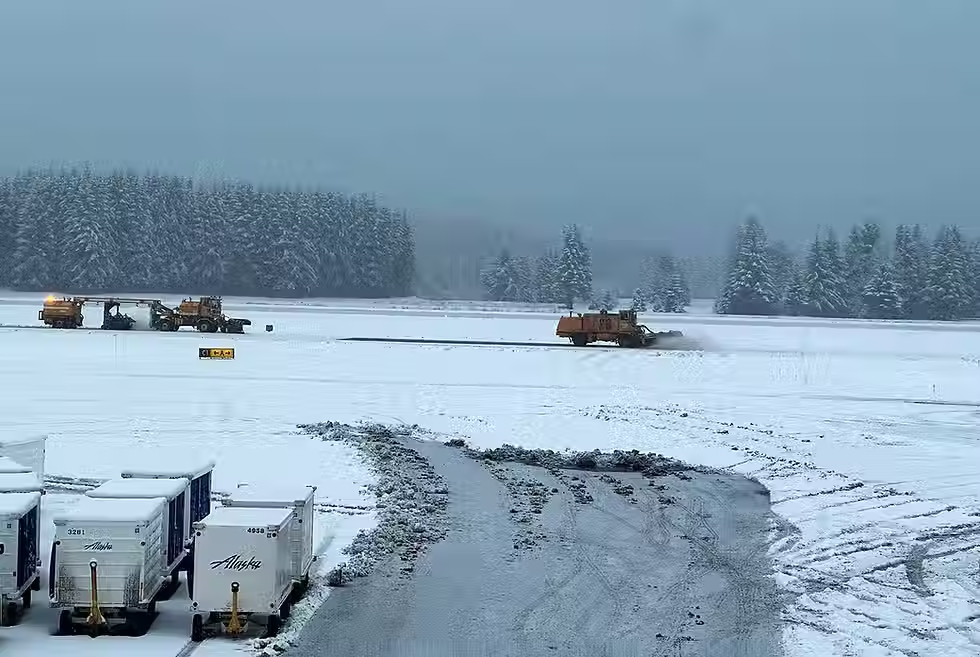
The weather clearly had other ideas.
A record 9.6 inches fell at the airport on Dec. 6, resulting in the first measurable snowpack that month at the airport. Another four inches fell Dec. 7, causing widespread power outages. Then on Monday, the first instance of heavy snow being followed by intense cold occurred, with the first sub-zero temperature of the winter recorded Dec. 10 at minus 5.8 degrees Fahrenheit.
Snow returned in force on Dec. 15 when yet another record was set with 9.2 inches of accumulation, putting the monthly total at 29.3 inches — well past the monthly average of 20.2 inches. But what Juneau residents now commonly refer to as "Snowmageddon" or "Snowpocalypse" was just getting started.

Another sub-zero cold snap — which had homeless campers pleading for heating fuel bottles, and caused problems with water pipes at Eaglecrest Ski Area and elsewhere — had Juneau in a deep freeze leading up to winter solstice. Daily cold-temperature records were set three times during a four-day period ending Dec. 22.
A mass snowfall event began Dec. 27, with Juneau receiving the most accumulation during a five-day period in recorded history, with some areas reporting depths of more than six feet. The December snowfall total at Juneau’s airport reached 82 inches, shattering the old record of 54.7 inches set in 1964.
The results were dire in many ways as boats and their shelters sank, roofs at businesses collapsed, water pipes burst and froze, and residents in some small Southeast communities were isloated without plane or ferry service for extended periods.

The situation didn’t arrive with the arrival of the New Year as, among other things, the fuel canopy at Fred Meyer's gas station collapsed on Jan. 1 and the store itself was evacuated due to roof safety concerns. Snowload concerns at that store and the Nugget Mall would result in both being closed for multiple-day stretches.
A snowfall disaster declaration, announced Jan. 6 by Juneau’s municipal government by the city and Central Council of the Tlingit and Haida Indian Tribes of Alaska, was ratified by the Juneau Assembly a day later, allowing state aid to help with clearing and repair efforts. The record-breaker situation put Alaska’s capital city in the global media spotlight, with legitimate media and AI-driven websites covering the situation with varying degrees of accuracy and folly.
More heavy snowfall during the first half of January also saw heavy rain that resulted in high avalanche, roofload and flooding concerns. An evacuation advisory for hundreds of residents living near slide paths resulted in an emergency shelter being set up at Centennial Hall where some families lived for days, while some residents in other areas struggled to keep their homes from being deluged by floodwaters.

On Jan. 13, City Manager Katie Koester told Assembly members that — with the help of more than 200 people flown in on one plane and a load of shovels on another — more than 3 million pounds of snow from municipal facilities and schools following the storms from previous weeks.
The airport received 21.1 inches of snow during the month of January, below the historical average of 24.5 inches. But the February total of 27.9 inches surpassed the average of 16.7 inches, including a record 9.6 inches on Feb. 28. In a moment of supreme irony, a study released that month declared the length of Juneau’s winters are shrinking faster than any other city in a national study due to climate change.
March came in like a lion and kept roaring, with a record 7.3 inches of snow March 3, followed by a series of snow showers during the next few weeks that put Juneau within seeming reach of the all-time record by last Thursday, with total airport accumulation at 181.7 inches. The long-held assumption was the official record was 194.3 inches set in 1964-65.
More snow showers, including a daily record of 3.6 inches on Sunday, put Juneau’s total at 195.8 inches — except that was also the day NWS Juneau officially changed the record by adding 7.5 inches to the total from 2006-07, setting the new benchmark of 197.9 inches.
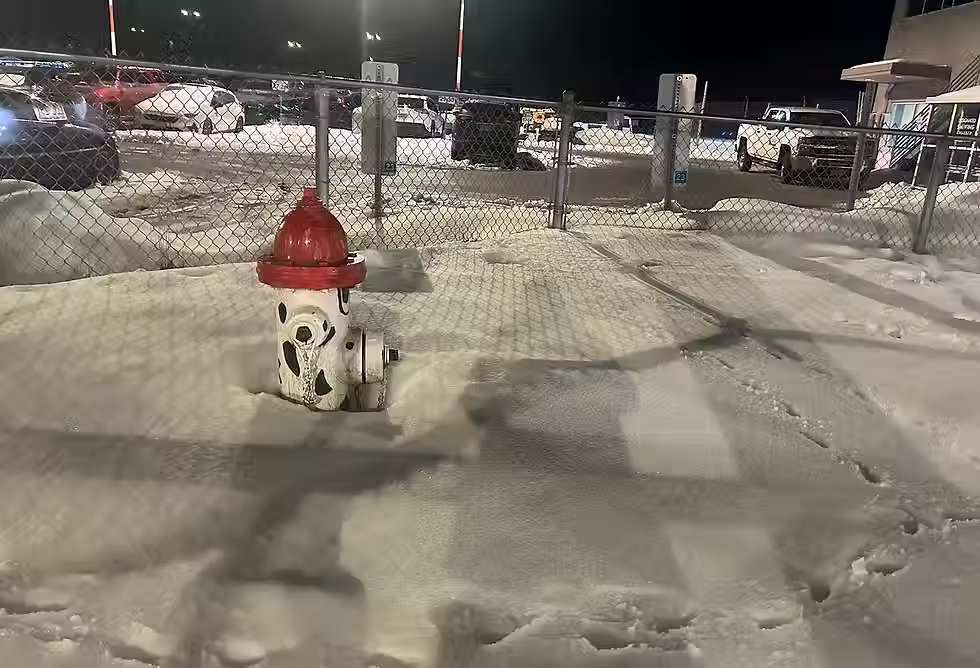
Nicole Ferrin, warning coordination meteorologist for the Juneau weather station, said Monday that Aaron Jacobs, an employee at the station since 2002, raised concerns about the accuracy of local climate records based on having worked and lived through the winter of 2006-07.
"He's the one that pointed out to the rest of us that this was a problem, and they'd actually attempted to fix the climate record quite a few years ago," she said. "And I guess we didn't have the paper copies back then to back it up, but we found other sources to get the climate record correct."
Ferrin said local staff spent the previous week examining records trying to confirm — and update if necessary — the data, with an eye on making sure any declaration a new snowfall record for Juneau is indeed accurate.
A short time later on Monday, NWS Juneau issued its special weather statement calling for up to three inches of snow — and when the clock reached midnight about nine hours later the winter of 2025-26 was officially one for the history books.
• Contact Mark Sabbatini at editor@juneauindependent.com or (907) 957-2306.


_edited.jpg)



.png)

.png)